

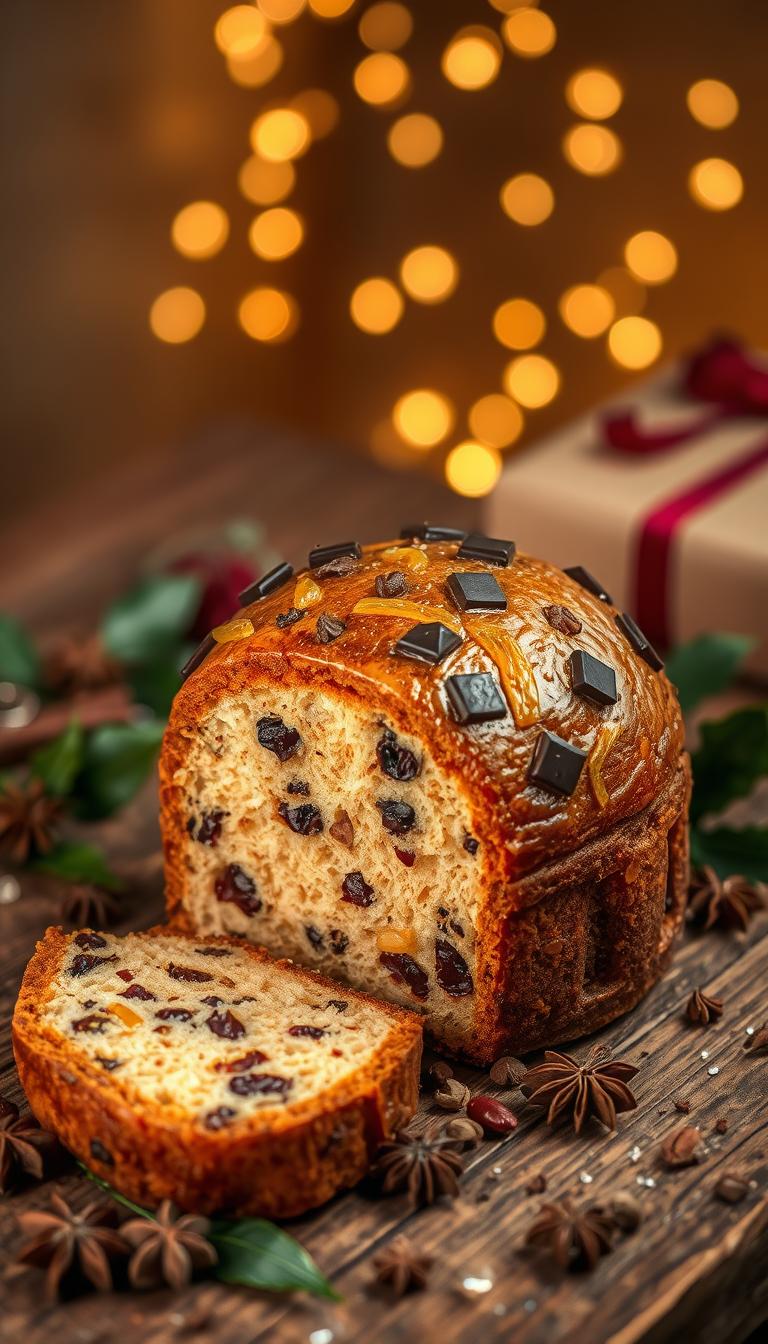
Panettone, the iconic Italian Christmas bread, is a delightful, fluffy masterpiece synonymous with holiday celebrations. Its sweet, aromatic dough is studded with candied fruits and raisins, then lovingly baked into a tall, domed shape that beckons with warmth and nostalgia.
Origins and History
A Taste of Tradition
Originating from Milan in the 15th century, panettone’s history is steeped in rich tradition and folklore. Legend has it that a nobleman fell in love with a baker’s daughter and created this sweet bread as a token of his affection, giving rise to a beloved Christmas treat. Over the centuries, this festive bread has transcended borders, evolving from a local delicacy to a global phenomenon, capturing the hearts and palates of many.
Cultural Significance
More Than Just a Bread
In Italy, panettone is more than just a dessert; it embodies the spirit of togetherness and celebration during the holiday season. Families gather around the table to share slices, often accompanied by a glass of sweet wine or a steaming cup of coffee, creating memories that linger long after the season has passed.
Unique Ingredients and Flavors
A Symphony of Taste
The magic of panettone lies in its carefully chosen ingredients. Flour, sugar, eggs, butter, and a touch of yeast come together to create a rich, buttery dough. The addition of candied orange and lemon peels, along with plump raisins, infuses each bite with a burst of flavor, while the fragrant notes of vanilla and almond extract enhance its complexity. The slow fermentation process not only contributes to its airy texture but also allows the flavors to deepen, creating a truly unforgettable experience.
Cooking Techniques
The Art of Patience
Crafting panettone is an art that requires time and patience. The dough undergoes multiple rises, allowing it to develop its signature lightness. Mastering this process is essential; it’s what transforms simple ingredients into a festive centerpiece that dazzles the senses. Whether you’re a seasoned baker or a curious novice, the joy of creating this traditional Italian bread is a journey worth taking, filled with delightful aromas and the promise of holiday cheer.
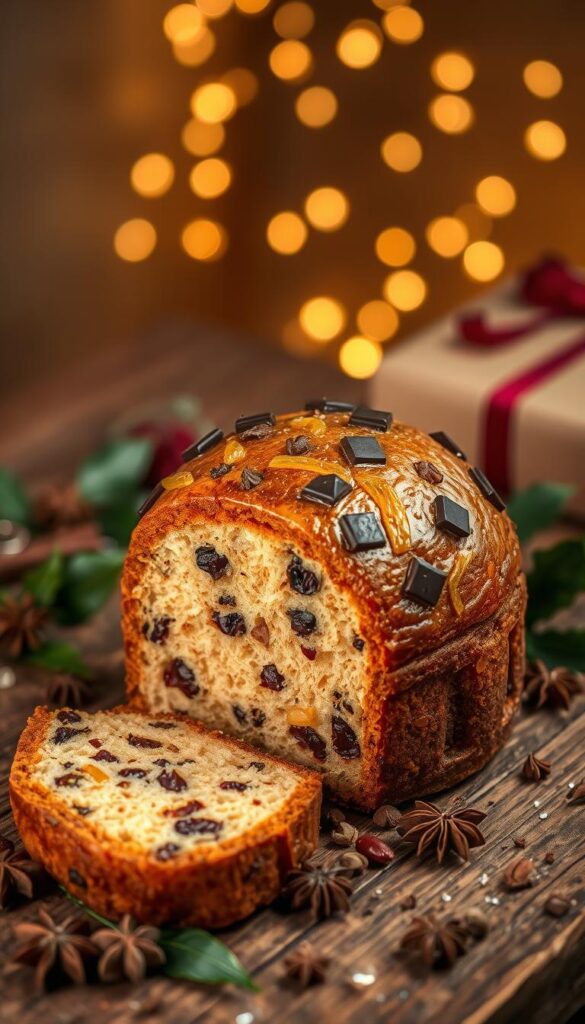
Panettone (Italian Christmas Bread)
Description
This rich, buttery bread is a holiday favorite, featuring a tender crumb and fragrant notes of orange and lemon. It's a true testament to Italian baking traditions!
Ingredients
Panettone Ingredients
Instructions
Preparing the Starter
-
Mix the Ingredients
In a medium bowl, combine 100g of all-purpose flour, 50g of warm milk, and 15g of active dry yeast. Stir until well mixed.Ensure the milk is warm, not hot, to protect the yeast. -
Let it Rise
Cover the bowl with a damp cloth and let it rise in a warm place for about 30 minutes, or until it becomes frothy and doubles in size.This is crucial for a fluffy texture, so don't rush this step!
Making the Dough
-
Combine Ingredients
In a large mixing bowl, combine the starter, 300g of all-purpose flour, 100g of sugar, 3 eggs, 70g of melted butter, and a pinch of salt. Mix until a dough forms.Use your hands or a stand mixer with a dough hook for best results. -
Knead the Dough
Transfer the dough to a floured surface and knead for about 10 minutes, until it becomes smooth and elastic.Don't be shy—this is where you develop the gluten for that wonderful texture! -
Add the Fruits
Gently fold in 100g of candied orange peel, 100g of raisins, and 100g of candied cherries until well distributed.You can substitute these with other dried fruits if preferred.
First Rise
-
Let it Prove
Place the dough in a lightly greased bowl, cover it with plastic wrap, and let it rise for about 1-2 hours, or until doubled in size.A warm, draft-free area is ideal for this step.
Shaping the Panettone
-
Shape the Dough
Turn the risen dough onto a lightly floured surface and gently deflate it. Shape it into a ball, tucking the edges underneath.Make sure to handle it gently to keep the air pockets intact. -
Transfer to Panettone Mold
Place the shaped dough in a tall, cylindrical panettone mold. If you don't have one, you can use a deep cake pan lined with parchment paper.Greasing the mold lightly helps prevent sticking.
Final Rise and Baking
-
Second Rise
Cover the mold with a cloth and let it rise again for about 1-1.5 hours until it reaches the top of the mold.Patience is key—this will ensure a nice airy loaf. -
Preheat the Oven
Preheat your oven to 180°C (350°F).Make sure your oven is fully preheated for even baking. -
Bake the Panettone
Bake for about 40-50 minutes, or until the top is golden brown and a skewer comes out clean.If it browns too quickly, cover it with aluminum foil.
Cooling and Serving
-
Cool the Bread
Remove the panettone from the oven and let it cool in the mold for 10 minutes. Then, transfer it to a wire rack to cool completely.Cooling completely is essential to maintain its structure. -
Serve and Enjoy
Slice and serve your panettone with a warm drink or as a festive dessert. Enjoy the joy of sharing this special treat!Panettone pairs wonderfully with a glass of sweet wine or espresso.
Note
- Use high-quality flour, preferably Italian “00” flour, for a light and airy texture.
- Allow the dough to rise slowly in a cool environment for better flavor development; overnight in the fridge is ideal.
- Incorporate ingredients like candied citrus peel, raisins, or chocolate chunks—soak the dried fruits in rum or warm water for enhanced moisture and flavor.
- Be generous with the egg content; it contributes to the rich flavor and tender crumb.
- Ensure the dough is well-kneaded until smooth and elastic, which develops gluten structure.
- Use a panettone mold for proper shape and height; if unavailable, a tall, round cake pan can work.
- After baking, invert the panettone on a wire rack to cool—this prevents the dome from collapsing.
- Store in an airtight container at room temperature; it can last up to a week, and the flavors will continue to meld.
- For a festive touch, dust with powdered sugar or serve with a drizzle of warm chocolate sauce.
- Consider adding a touch of vanilla or almond extract to the dough for an extra layer of flavor.
- For a gluten-free version, use a gluten-free flour blend and adjust the liquid content accordingly.
- If you're short on time, consider using a bread machine for the kneading and first rise.
- To enhance the crust, brush the top with a mixture of egg yolk and milk before baking.
- Consider pairing with a sweet wine or dessert wine for a delightful holiday treat.
- If you like a more pronounced nutty flavor, toast nuts before adding them to the dough.
- Experiment with different fillings like pistachios, dried cherries, or even a marzipan center for a unique twist.
- If you’re unsure about the doneness, use a skewer; it should come out clean when inserted into the center.
- Remember, patience is key; the longer fermentation leads to deeper flavors and improved texture.
- Serve with a side of mascarpone cheese for a decadent pairing.