
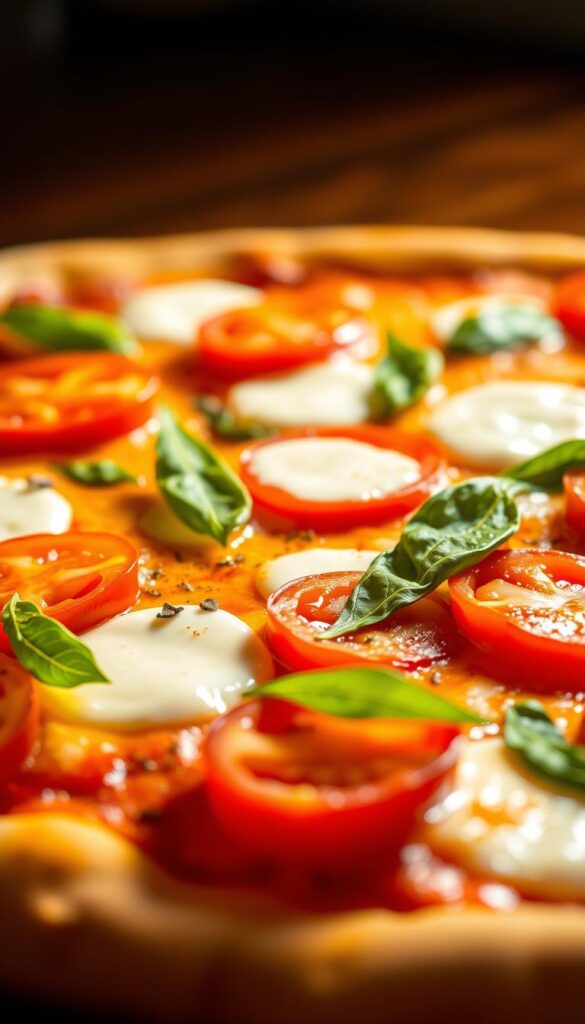
The Margherita pizza is a classic Italian dish that celebrates simplicity and fresh flavors. With its perfect harmony of ripe tomatoes, creamy mozzarella, and fragrant basil, it’s a timeless favorite that embodies the essence of Italian culinary tradition.
The Margherita pizza has a charming story rooted in Italian history. It is said to have been created in 1889 by a Neapolitan pizzaiolo named Raffaele Esposito. Legend has it that he crafted this pizza to honor Queen Margherita of Savoy during her visit to Naples. The choice of ingredients—red tomatoes, white mozzarella, and green basil—was no accident, as they mirrored the colors of the Italian flag. This thoughtful tribute to Italian unity and pride won the queen’s favor, and thus, the Margherita pizza was born, becoming a beloved symbol of Italy’s rich culinary heritage.
What makes the Margherita pizza truly special is its reliance on high-quality, fresh ingredients. The tomatoes should be ripe and juicy, preferably San Marzano, which provides a sweet and tangy base. The mozzarella, ideally a fresh buffalo variety, melts into creamy pockets that create a delightful contrast to the tomatoes. And let's not forget the basil—its aromatic leaves add a burst of freshness that ties everything together. Each ingredient shines in its own right, yet together they create a symphony of flavors that is both elegant and comforting.
Crafting the perfect Margherita pizza is an art form that requires patience and finesse. The dough is the cornerstone, needing to be kneaded with care to achieve the right texture—airy yet chewy, with just the right amount of crispness. A hot oven is crucial, as it allows the pizza to cook quickly, preserving the freshness of the ingredients while achieving that coveted golden crust. The process of making a Margherita pizza may be simple, but it’s in the nuances—the way you stretch the dough, the order of layering the ingredients, and the timing of baking—that the magic truly happens.
For the best results when making a Margherita pizza, ensure your dough is at room temperature before stretching—it'll be more pliable and less likely to tear. Use a high-quality San Marzano tomato sauce for an authentic flavor. When it comes to mozzarella, opt for fresh mozzarella di bufala; its creaminess elevates the entire dish. Tear the basil leaves by hand instead of cutting them with a knife to prevent them from bruising and browning. Preheat your oven to its maximum temperature for a crispy crust, and if you have a pizza stone, place it in the oven while preheating to mimic a traditional pizza oven. Remember to drizzle a touch of extra virgin olive oil over the top before serving for that final flourish that ties everything together. Enjoy the simplicity and elegance of this classic pizza.