
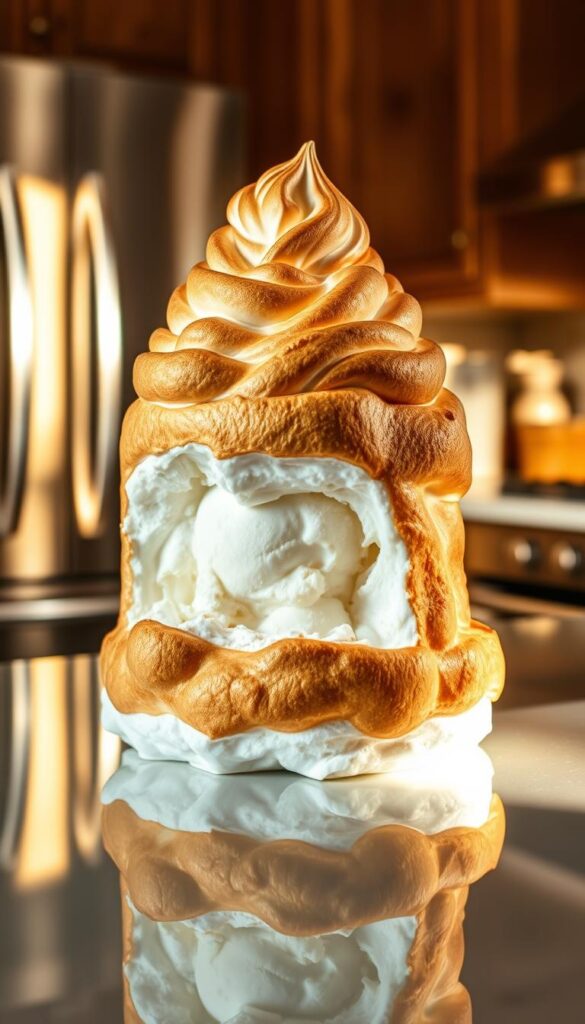
Baked Alaska is a stunning dessert that combines the silky smoothness of ice cream with the airy lightness of meringue, all enveloped in a warm, golden crust. This delightful contrast between temperatures and textures makes it a show-stopping finale for any dinner party. Imagine cutting into a perfectly browned meringue shell, revealing a chilled core of ice cream atop a soft sponge cake base—the harmony of flavors and sensations is simply mesmerizing.
The origins of Baked Alaska trace back to the 19th century, a testament to culinary creativity and innovation. It’s believed that the dessert was first introduced to honor the acquisition of Alaska by the United States in 1867. The name itself evokes a sense of grandeur and mystery, much like the vast, untamed wilderness for which it is named. Over the years, Baked Alaska has been celebrated in various forms across the globe, each iteration maintaining the classic elements that define it. Its reputation as a dessert for special occasions has persisted, making it a symbol of celebration and indulgence.
What makes Baked Alaska truly unique is the seamless combination of contrasting elements. The meringue, whipped to soft peaks and then browned to perfection, serves as both an insulating layer and a delightful topping. The ice cream at the center can be customized to suit any palate, whether you prefer the classic vanilla or more adventurous flavors like pistachio or raspberry. The base, often a simple sponge cake, provides a sturdy foundation that soaks up any melting ice cream, ensuring each bite is a balance of creamy, sweet, and slightly crisp textures. The technique of baking something frozen might sound paradoxical, but it’s this very paradox that makes Baked Alaska so intriguing. By ensuring the meringue is thick enough, you create a barrier that protects the ice cream from the oven’s heat, allowing for that magical moment when the dessert is revealed in all its glory.
When preparing Baked Alaska, ensure that the ice cream is very firm before assembling. It's essential to allow the cake to cool completely to prevent melting when adding the ice cream. Toast the meringue using a kitchen torch for precise control over browning, or bake in a hot oven for a short period, watching carefully to avoid overcooking. Use a serrated knife for clean slices, and serve immediately for best texture contrast. For a twist, experiment with different ice cream flavors or add a layer of fruit preserves between the cake and ice cream for added complexity.