
BestRecipesBlog.com is a participant in the Amazon Services LLC Associates Program, an affiliate advertising program designed to provide a means for sites to earn advertising fees by advertising and linking to Amazon.com. As an Amazon Associate, I earn from qualifying purchases.
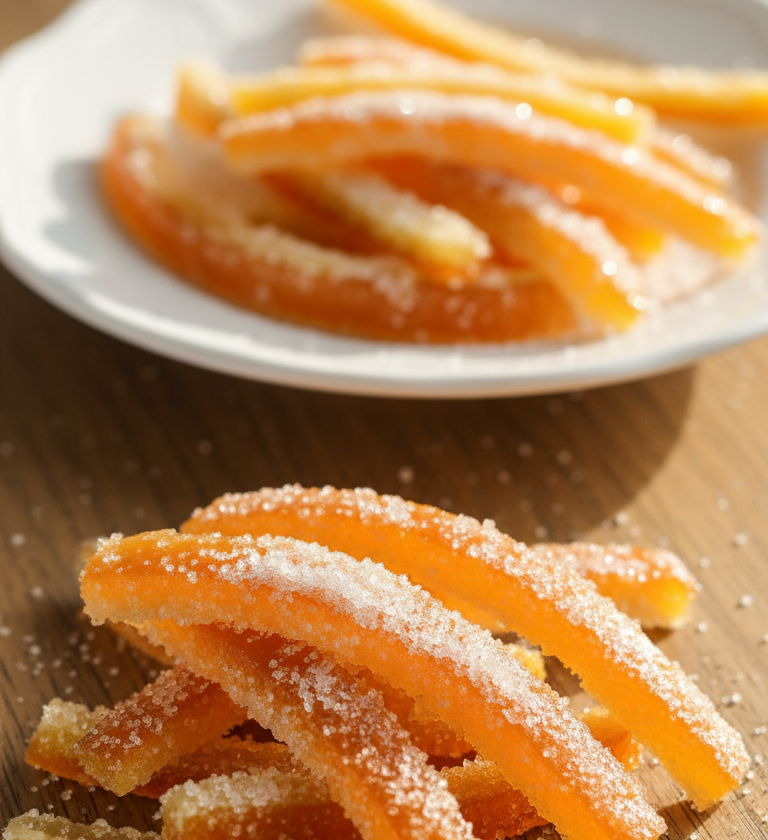
Homemade candied orange peel outshines store-bought versions in flavor and texture. Making candied citrus at home lets you skip additives and control sweetness. You can use orange, lemon, lime, grapefruit, mandarin, or clementine peels with the same basic technique.
To make the best candied orange peel, start with organic fruit when possible and scrub it thoroughly. Typical ratios are about 1 part peel to 2 parts sugar by volume. A common batch uses three large oranges, two cups of granulated sugar, and one cup of water.
The method is simple: slice the peels into roughly 1/4-inch strips, boil or blanch them once to three times to remove bitterness, then simmer in a simple syrup for 45–60 minutes, until translucent. Remove with a slotted spoon, drain briefly, and either toss in fine sugar or dry on a wire rack for 1 to 2 days.
Yield is typically 8 ounces of candied peels, depending on thickness. Store homemade candied orange peel in an airtight container at room temperature for about a month, refrigerate for longer life, or freeze for several months. Reserve the leftover syrup as a bright orange simple syrup for drinks.
Key Takeaways
- Homemade candied orange peel delivers fresher flavor and no additives.
- Use organic citrus and scrub thoroughly before peeling.
- Boil/blanch to cut bitterness, then simmer in syrup until translucent.
- Typical recipe: 3 oranges, 2 cups sugar, 1 cup water; yields about 8 oz.
- Store in airtight containers; syrup can be used for beverages.
Chocolate-Dipped Candied Orange Peel

After candying and drying your orange peels, a quick dip in high-quality chocolate turns them into an elegant treat. Use organic fruit when possible and scrub peels well before candying to keep flavors bright. Partially dipped strips make great garnishes, while fully coated pieces feel like a classic confection.
For silky couverture texture, melt about 8 oz of chocolate over a double boiler. Use tongs or a fork to lower each strip, shake off excess, then set on parchment or a silicone mat. For a quicker method, microwave small pieces for 30-second bursts with a teaspoon of coconut oil until smooth. Add a touch more oil if the chocolate is too thick.
Orangettes make lovely homemade gifts. Pack them in small boxes with tissue or tuck a few into holiday tins. Use candied orange peel dipped in chocolate as dessert garnishes on panna cotta, ice cream, or tarts. They pair well with aged cheeses on a board for a sweet contrast.
To set the chocolate, refrigerate dipped peels for 10–15 minutes. Store finished pieces in an airtight container in a cool, dry place, and use within 5–7 days. Undipped crystallized orange peel will keep for one to three months at room temperature when well sealed.
Chocolate Dip Methods & Storage
Double-boiler dipping gives control and a glossy finish. Microwave melting saves time: mix the chocolate and coconut oil in short intervals, stirring until smooth. Use tongs for neat handling and a silicone mat to avoid sticking.
Refrigeration prevents melting in warm kitchens. Do not freeze candied orange peel dipped in chocolate, as thawing can dull the shine and cause sugar bloom. For best results, label containers with the date and enjoy chilled within a week.
Beyond sweets, consider other uses for candied orange peel: fold small pieces into cookie dough, chop them into spiced muffins, or scatter bits across a cheese platter. These uses highlight the bright citrus flavor of crystallized orange peel and the rich contrast of chocolate.
Spiced Candied Orange Peel (Cinnamon & Clove)

Bright orange peels gain warmth when simmered with whole cinnamon sticks and cloves. The basic candied citrus method remains the same: blanch the peels to reduce bitterness, then simmer them in a simple syrup until translucent. This approach transforms a classic candied orange peel into a festive, aromatic treat.
To make candied orange peel with spices, add the cinnamon and cloves to the sugar water before adding the peels to the pot. Simmer gently for 45–60 minutes until the rinds turn clear, and the syrup is lightly thickened. Avoid vigorous stirring once translucence starts to prevent sugar crystals; a gentle swirl is enough.
After cooking, let the peels cool in the spiced syrup to infuse extra flavor. Drain and dry the strips on a rack. For gift-ready pieces, roll tacky peels in granulated sugar. Leaving them uncoated yields a softer, glazed finish that works well in baked goods.
Spiced candied orange peel pairs well with panettone, stollen, and holiday cookies. The reserved syrup becomes a versatile ingredient for cocktails, tea, or glazes. Store peels in an airtight container at room temperature for up to a month; refrigeration will extend shelf life.
Try small variations, such as star anise or fresh ginger, to create a different profile. This candied orange peel recipe provides clear steps and useful tips for making spiced candied orange peel and highlights common uses of candied orange peel in baking and drinks.
Spice Pairings & Technique
Choose whole spices for clean flavor extraction. Cinnamon and clove create classic warmth. Star anise adds licorice notes. Fresh ginger offers bite.
Simmer on low heat and check translucence after 45 minutes. Cooling in syrup deepens the infusion. Dry on a rack before sugaring to avoid clumps.
Candied Orange Peel Marmalade
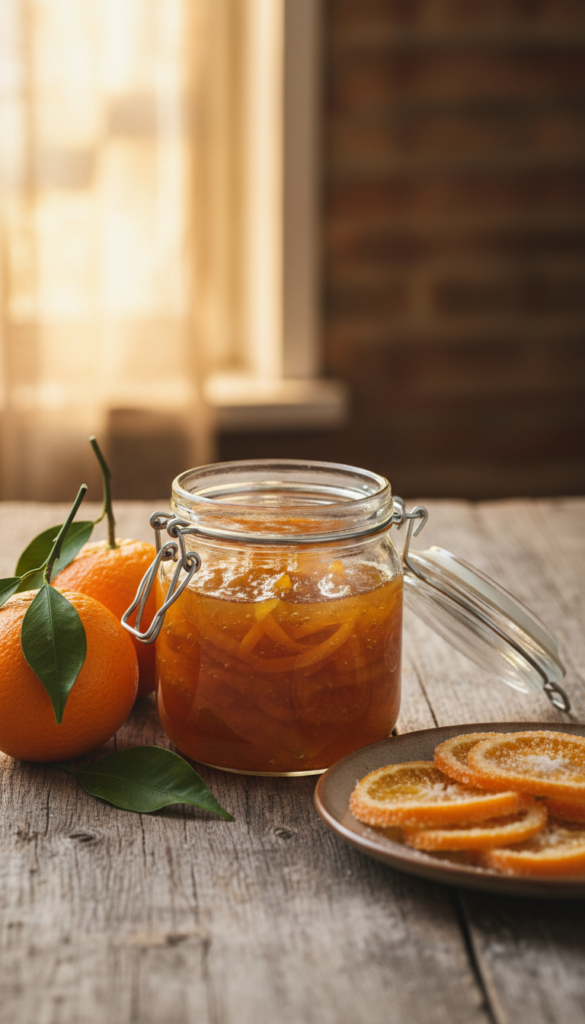
Turn extra syrup and peels from candying into a bright, textured marmalade. Use the citrus syrup as a cooking base, add fresh orange juice and a touch of pectin, then simmer until the jam sets. This method stretches ingredients and deepens flavor.
For a richer bite, finely chop crystallized orange peel and fold it into the cooked marmalade near the end of the boil. Folding at the finish keeps the peels tender and translucent while preserving their caramelized notes.
Stir chopped peel into hot marmalade for use on toast, scones, or stirred into yogurt. A jar of candied orange peel marmalade makes a thoughtful, homemade gift that showcases preserved citrus.
Preserve jars using standard canning: hot-pack into sterilized jars, seal, and process in a water bath for long-term shelf stability. If you prefer to skip canning, refrigerate and use within a month for best quality.
Use organic fruit and scrub peels before candying to avoid wax and residues. Small tweaks—adding lemon juice for acidity or a splash of Grand Marnier for depth—lift the final marmalade without masking the orange.
Marmalade Uses & Preservation
Spread on morning toast, spoon over ricotta, or mix into glaze for roast pork. Candied orange peel for baking works well folded into muffins, layered in cakes, or chopped into cookies for bursts of citrus.
Label jars with the date and ingredients when storing. Properly processed jars keep for months in a cool pantry; refrigerated jars stay fresh for several weeks.
Candied Orange Peel Biscotti
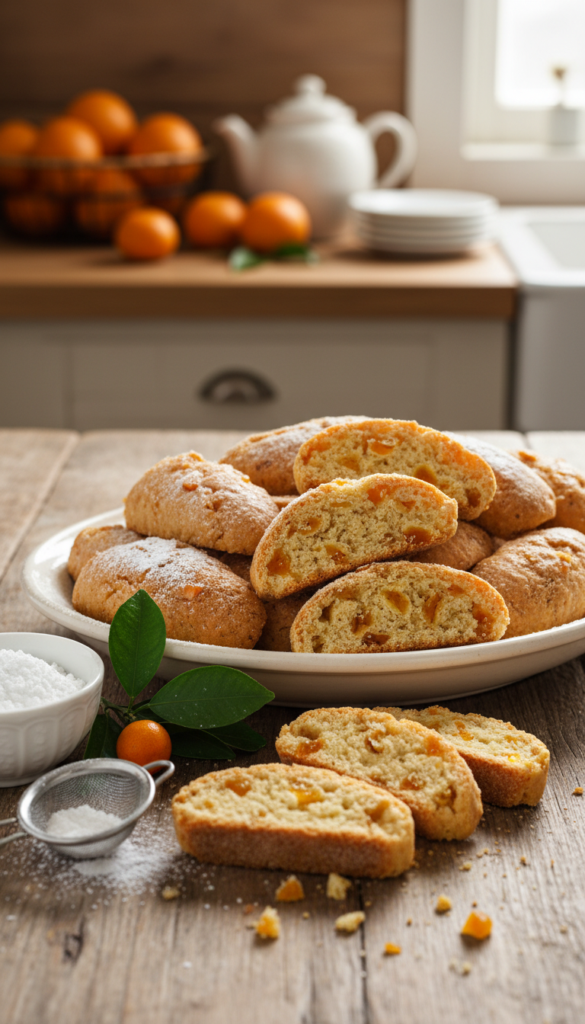
Candied orange peel brings bright citrus and a gentle chew to biscotti. Use chopped crystallized orange peel for texture and flavor that survives two rounds of baking. Homemade peels from a trusted source, such as King Arthur or Williams-Sonoma, tend to taste fresher than many mass-produced options.
Measure chopped peels by weight for consistent results. If the pieces are sticky, toss them with a light dusting of flour to distribute them evenly through the dough. Mix candied orange peel for baking with sliced almonds, pistachios, or a handful of dark chocolate chips for contrast.
Bake biscotti twice as usual. The residual syrup on the peels aids caramelization and gives the surface a glossy, crunchy finish. If stored in the jar, peels will firm up; they soften during baking, which suits biscotti, where a touch of chew is welcome.
For the best candied orange peel, use thin strips, then chop them into small, consistent pieces before folding them into the dough. Weigh the ingredients, keep the dough cool, and slice the logs with a serrated knife to prevent squishing. Aim for even thickness so slices bake uniformly.
Baking tip: Arrange biscotti on the middle rack for the first bake, then flip halves for the second bake to dry edges without overbrowning. This controls texture, yielding crisp, lightly chewy slices that pair perfectly with coffee or Vin Santo.
Candied Orange Peel Pound Cake

The bright, concentrated flavor of candied orange peel lifts a classic pound cake into something memorable. Fold in chopped candied orange peel for bursts of citrus flavor and chewy texture. For an even softer bite, briefly soak the pieces in the reserved citrus syrup or a light simple syrup before adding them to the mix.
Use candied orange peel in butter pound cakes, olive-oil loaves, or any dense batter that retains moisture. Drier peels, well-coated in sugar, often relax during baking and produce small pockets of chew that contrast nicely with the tender crumb.
How to make candied orange peel at home matters when planning texture. Homemade candied orange peel, sliced thinly, will disperse more evenly than thick ribbons. If you make homemade candied orange peel, reserve the syrup; it becomes a perfect base for a glaze.
Brush a warm cake with a glaze made from leftover citrus syrup and powdered sugar to lock in shine and extra moisture. Store the finished loaf covered at room temperature for a couple of days. Refrigerate for longer keeping or freeze individual slices wrapped well for easy thaw-and-serve treats.
Incorporating Peels & Moisture Management
Chop peels into small, uniform pieces to prevent sinking. Toss them in a tablespoon of flour before folding them into the batter to help them suspend. If you prefer pronounced, candy-like bites, leave pieces larger and avoid soaking.
Adjust oven time if you add syrup-brushed glaze; a brief return to the oven helps the glaze set without drying the cake. The goal is a moist crumb with lively citrus notes from the additions of candied orange peel to the pound cake.
Candied Orange Peel Trail Mix
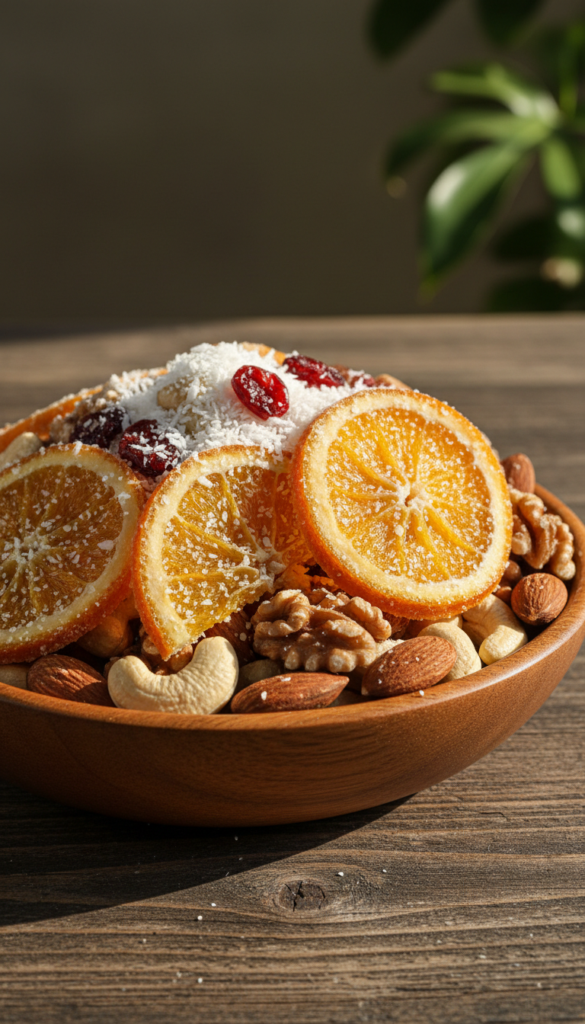
Start by chopping crystallized orange peel into bite-sized pieces. Mix with almonds, pistachios, or walnuts for crunch. Add pumpkin or sunflower seeds, along with a small handful of dried cherries or apricots, to enhance the fruit notes.
For texture, fold in wholegrain oats or granola. A few dark chocolate chips give richness without overpowering the citrus. If your peels feel sticky, lightly dust them with sugar or let them air-dry for an hour to prevent clumping.
Balancing Sweet & Savory
Toast the nuts before combining to deepen flavor. Sprinkle a pinch of flaky sea salt to balance the sweet-tart peels and highlight the bright candied citrus. Try spiced crystallized orange peel or chocolate-dipped pieces for seasonal variations.
Store the mix in an airtight container in a cool, dry place for up to a month. Refrigeration extends shelf life. When planning longer trips, pack smaller portions to keep the candied orange peel trail mix fresh and crunchy.
Candied orange peel uses range from snacks to baking additions. Use leftover trail mix atop yogurt, fold it into muffin batter, or offer it in gift jars for a homemade treat.
Candied Orange Peel Simple Syrup

When you candied orange peel, don’t toss the leftover syrup. That simmered mixture of peel, sugar, and water becomes a bright-orange simple syrup, perfect for cocktails, mocktails, iced tea, glazes, and baking. Strain the liquid, skim off any foam, and you have a pantry-ready ingredient that elevates drinks and desserts with a concentrated citrus aroma.
Syrup Uses & Storage
For immediate use, stir a spoonful of candied orange peel simple syrup into sparkling water or an Old Fashioned. The orange simple syrup also makes a lively glaze for pound cake or cookies—reduce it slightly or whisk with powdered sugar for a thicker finish. Spiced peels from the cinnamon-and-clove variation produce a warm, holiday-ready syrup for hot toddies and mulled tea.
Bottle the strained syrup in a sterilized jar, label it with the date and ingredients, and refrigerate. Best flavor lasts about two to four weeks when stored under candied orange peel storage guidelines. For longer keeping, freeze small portions in ice cube trays; thaw only what you need to maintain freshness for several months.
FAQ
What makes homemade candied orange peel better than store-bought?
What’s a reliable basic recipe and yield for candied orange peel?
How do I blanch peels and why is it necessary?
How do I sugar-coat or dry candied peels?
How should I store candied orange peel and how long does it keep?
Can I dip candied orange peel in chocolate? How do I do it?
Can I add spices while candying peels?
What can I do with the leftover citrus syrup?
How can candied peel improve marmalade?
How do I use candied orange peel in biscotti and other baked goods?
Any tips for adding candied peel to pound cake?
Can I use candied peel in trail mix?
How do I prevent sugar crystallization or graininess during candying?
What if my peels turn leathery or too dry?
How many times can I blanch different citrus varieties like lemon or grapefruit?
Any gift ideas using candied orange peel?
What’s the approximate nutrition for a serving of candied peel?