

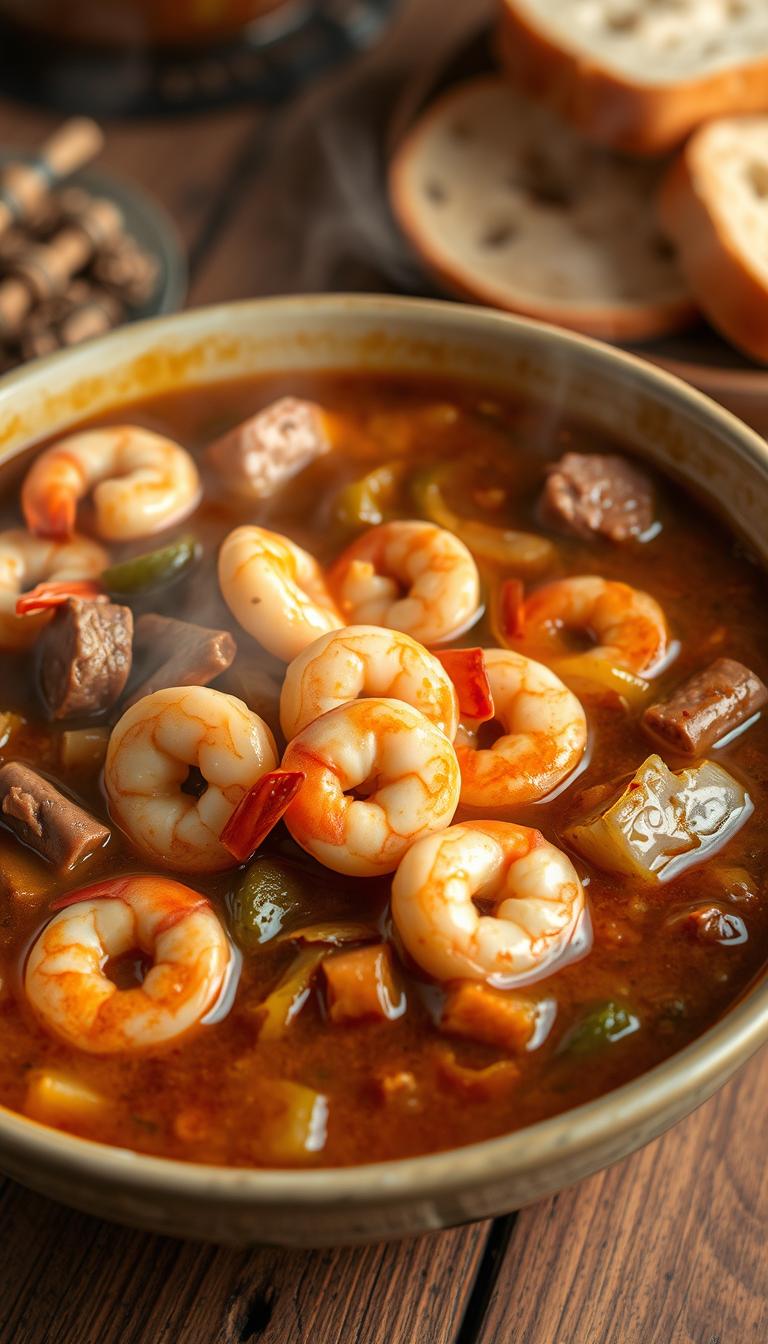
Imagine a pot simmering away, filled with a rich, aromatic blend of shrimp and sausage, creating a symphony of flavors that dance together in harmony. This is gumbo—a dish that is as much about the journey as it is about the destination. With its roots deeply embedded in Southern culinary tradition, shrimp and sausage gumbo is a celebration of culture, history, and the art of slow cooking.
The Rich Tapestry of Gumbo
Gumbo is more than just a meal; it’s a melting pot of flavors that tells the story of Louisiana’s diverse cultural heritage. Originating from the Creole and Cajun kitchens, gumbo brings together influences from French, Spanish, African, and Native American cuisines. This dish is a testament to the ingenuity of early settlers who made the most of local ingredients, creating a hearty stew that could sustain them through long days.
The Heart and Soul of the Dish
At the heart of any great gumbo is the holy trinity of Cajun cooking: onions, bell peppers, and celery. These aromatic vegetables lay the foundation for the dish, infusing it with a depth of flavor that is both comforting and complex. The addition of a rich roux, a mixture of flour and fat cooked to a deep brown, gives the gumbo its signature thick consistency and nutty undertones.
Unique Ingredients and Flavor Profiles
What sets shrimp and sausage gumbo apart is the interplay between the fresh, sweet shrimp and the smoky, spicy sausage. The shrimp adds a delicate touch, while the sausage brings a robust, savory element to the dish. Together, they create a perfect balance of flavors that is both satisfying and addictive.
Cooking Techniques That Make a Difference
Slow cooking is key to unlocking the full potential of gumbo. Allowing the ingredients to simmer gently over low heat ensures that every component melds together, enhancing the complexity of flavors. Toasting the spices beforehand is a little trick that adds an extra layer of depth, making each spoonful a delightful explosion of taste.
In this recipe, patience is truly a virtue. The time spent nurturing the gumbo on the stove is rewarded with a dish that is not only incredibly delicious but also steeped in tradition. Whether you’re sharing it with family or savoring a bowl on your own, shrimp and sausage gumbo is a culinary experience that warms the heart and soul.
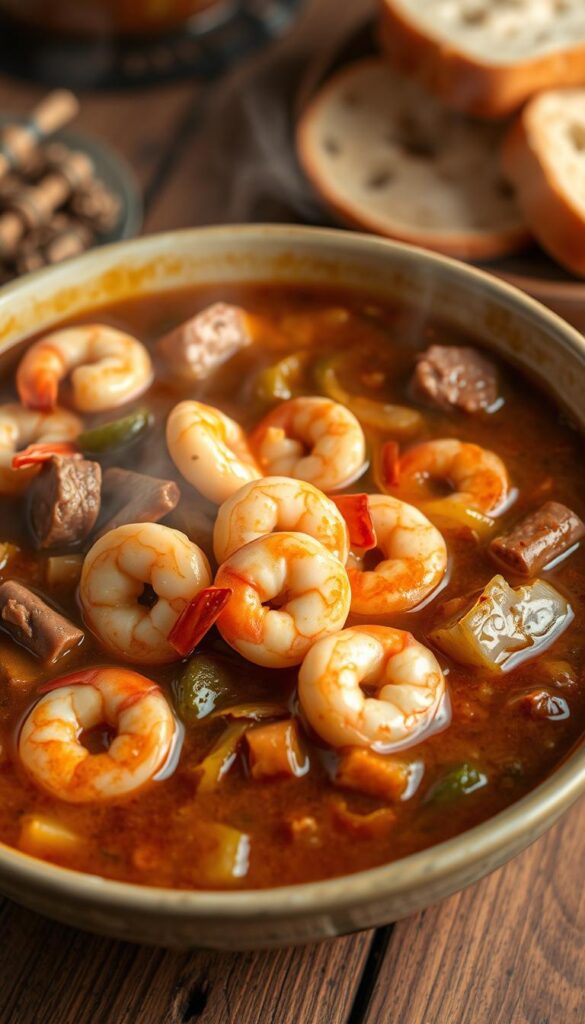
Delicious and Hearty Shrimp and Sausage Gumbo
Description
This gumbo is a celebration of bold flavors, combining succulent shrimp and savory sausage with aromatic spices. Ideal for sharing with family and friends.
Ingredients
For the Roux
For the Gumbo
Instructions
Preparing Your Ingredients
-
Gather and Prep All Ingredients
Begin by assembling all your ingredients. You'll need fresh shrimp, andouille sausage, the holy trinity of onions, celery, and bell peppers, along with garlic, chicken stock, spices, and flour.Peel and devein the shrimp, slice the sausage into bite-sized pieces, and chop your vegetables finely for even cooking.
Creating the Roux
-
Make the Roux
In a large, heavy-bottomed pot, combine equal parts flour and oil. Stir continuously over medium-low heat until the roux becomes deep brown, resembling milk chocolate, which will take about 20-30 minutes.Patience is key! Stir constantly to prevent burning. This step is vital for the deep, nutty flavor of your gumbo.
Building the Flavor Base
-
Add the Holy Trinity
Once the roux reaches the desired color, add the chopped onions, celery, and bell peppers. Stir well, allowing the vegetables to soften and absorb the roux’s flavors for about 5-7 minutes.This is when the kitchen really starts to smell divine! The veggies will release their moisture and meld with the roux. -
Incorporate Garlic and Sausage
Add minced garlic and sliced sausage to the pot. Continue cooking for another 5 minutes, stirring often to ensure even cooking and flavor distribution.The sausage should start to brown slightly, adding extra depth to your gumbo.
Simmering the Gumbo
-
Add Stock and Seasonings
Pour in the chicken stock slowly, stirring constantly to integrate the roux. Add bay leaves, thyme, cayenne, and a dash of salt and pepper.Adjust the seasoning to your taste. If you like it spicier, feel free to add more cayenne or a splash of hot sauce. -
Simmer Until Perfect
Bring the mixture to a gentle simmer and let it cook uncovered for about 45 minutes to an hour, allowing the flavors to meld and deepen.Stir occasionally to prevent sticking. This is where the magic happens, so don't rush it!
Finishing Touches
-
Add the Shrimp
In the last 10 minutes of cooking, add the shrimp to the pot. Cook until they turn pink and opaque, which should take about 5-7 minutes.Be careful not to overcook the shrimp; they should be tender and juicy. -
Adjust Seasoning and Serve
Taste your gumbo and adjust the seasonings if necessary. Remove from heat and let it rest for a few minutes before serving with steamed white rice.A sprinkle of fresh parsley or green onions makes a lovely garnish, adding a pop of color and freshness.
Note
For an extra depth of flavor, toast the flour for your roux until it reaches a rich, chocolate-brown hue; patience is key here. If you prefer a less spicy gumbo, opt for a milder sausage or reduce the amount of cayenne pepper. Fresh okra is ideal, but frozen works in a pinch—just be sure to thaw it completely before adding it to the pot. The holy trinity of Cajun cooking—onion, bell pepper, and celery—should be diced uniformly to ensure even cooking. Consider using homemade shrimp stock for an elevated taste, simmered from the shrimp shells with bay leaves and peppercorns. For a gluten-free version, use gluten-free flour for the roux. Gumbo is a forgiving dish; feel free to add other seafood like crab meat or adjust the spices to your liking. Store leftovers in an airtight container in the fridge for up to three days, or freeze for longer storage. Serve your gumbo with a scoop of fluffy white rice and garnish with fresh parsley or green onions for added color and freshness.